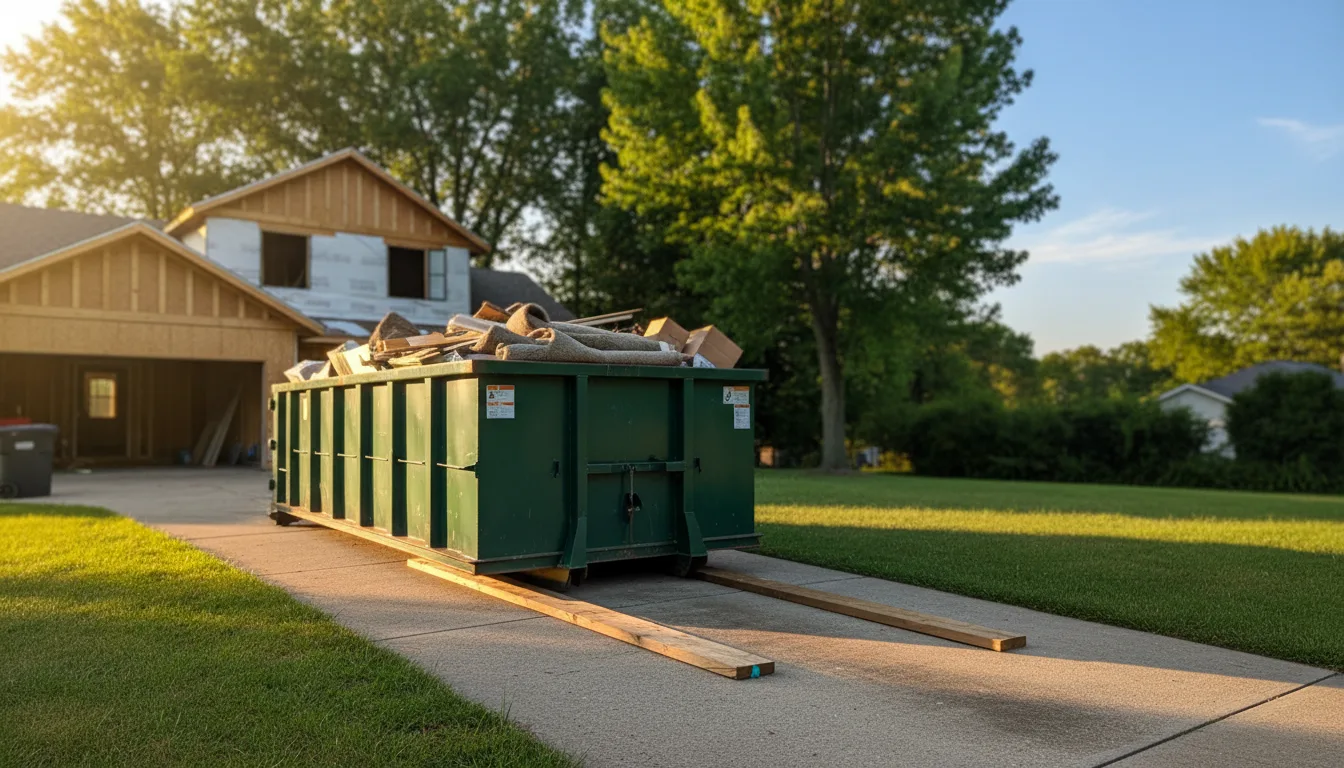
On a jobsite, the dumpster is part of the schedule. When it fills before the drywall crew is done, work stalls; when it sits half empty for two weeks, you are paying for air. Construction dumpster rental in Grandy, MN is about matching container size and swap timing to the phases of the build, and the local roll-off haulers we connect you with do this for builders and remodelers every day.
Matching sizes to the phase of work
Different stages throw off different debris, and the right box changes as you go:
- Site prep and footings: heavy soil, rock and concrete belong in a 10 yard box with a strict weight limit
- Framing: lumber offcuts, sheathing and packaging fit well in a 30 yard dumpster
- Roofing: shingles are dense, so a 20 yard can or smaller usually works best
- Drywall, trim and finish work: a 20 or 30 depending on square footage
- Final cleanup: whatever size is left, often a 20
On large builds and commercial shells, a 40 yard roll-off can make sense for light, bulky waste, but it gets heavy fast once drywall and wet lumber pile in.
Swaps, weight and separating loads
Most construction customers do not keep one can for the whole job. They set up pull-and-replace service, where the hauler pulls the full box and drops an empty one in the same spot. Each haul is weighed, and anything above the included allowance is billed per ton. Keeping concrete, brick and dirt separate is worth the effort: a clean load of a single heavy material can often go to a recycler and may be priced differently, while the same concrete mixed with trash is treated as general debris. Our construction debris removal page covers disposal options in more detail.
Paperwork and site rules
General contractors and property owners often require a certificate of insurance from the hauler before a container lands on site, so ask for one up front. Street placement typically needs a right-of-way permit, and some municipalities require construction and demolition recycling on larger permitted projects, which may mean sorted containers or a recycling report. Keep the container accessible: the truck needs roughly 60 feet of straight approach and clear overhead space. Plywood under the rails protects new driveways and finished concrete.
What stays off the truck
Most haulers refuse liquid paint, solvents, adhesives in liquid form, fuel, propane cylinders, batteries and anything with asbestos. Old roofing and siding from homes built before the 1980s can contain asbestos, so test before you tear off. Treated lumber, drywall and metal studs are normal construction loads. Nothing should rise above the top rail, since an overloaded container cannot be tarped for the road.
Call (877) 789-1790 to get connected with a roll-off hauler covering Grandy, MN and ask which sizes and swap slots are open this week.